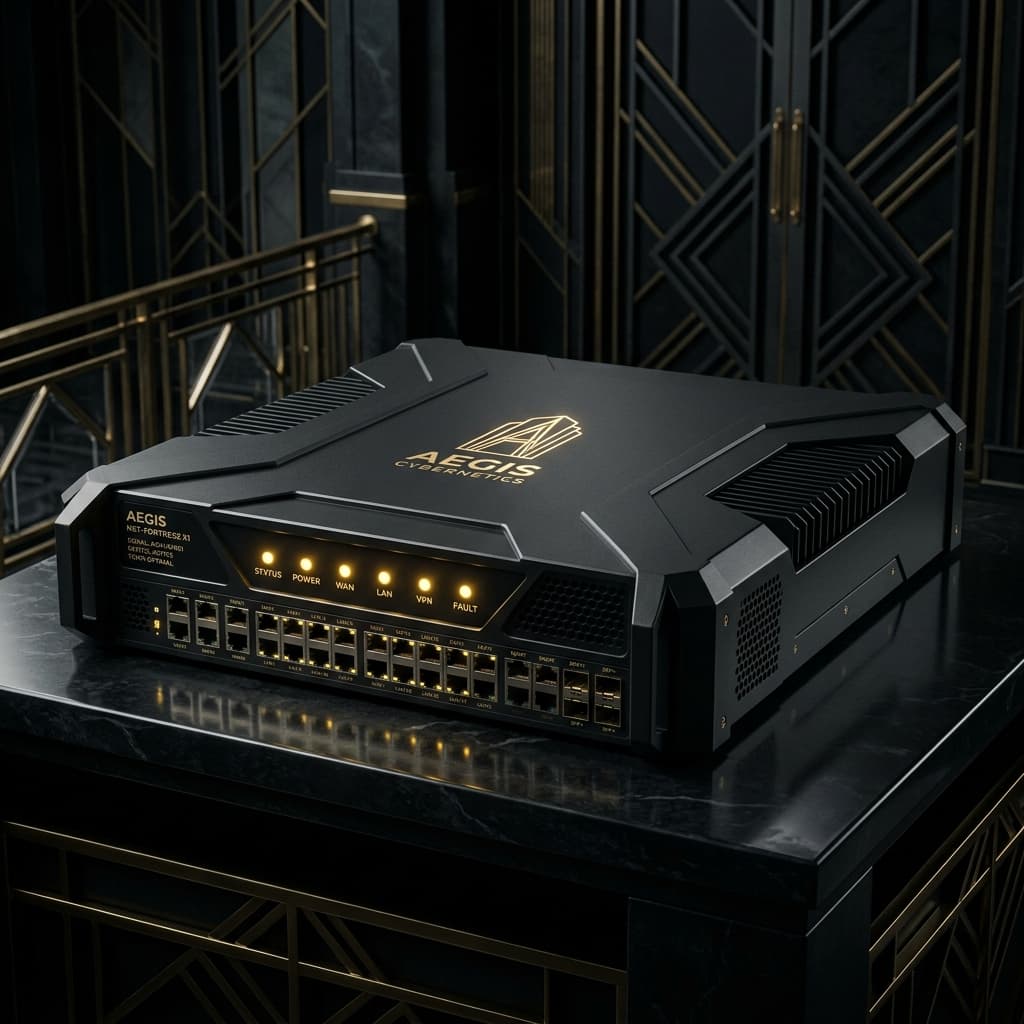
Your network doesn't wait for a problem to announce itself.
Most networks are monitored the day they're installed and then quietly forgotten. We watch every layer continuously — so a fault is a line on a dashboard, not a phone call from a staff member standing at a dead terminal.
- UPTIME · monitored continuously
- FIREWALL · reviewed daily
- SEGMENTATION · enforced
- PATCHING · managed cadence
“It’s been fine so far” is not a monitoring strategy.
A network that only gets attention when something breaks is a network that fails at the worst possible moment — mid-invoice run, mid-client meeting, mid-quarter.
- A firewall installed once, years ago, and never revisited since.
- One flat network where a single infected laptop can reach every server in the building.
- Outages discovered when a staff member complains, not before.
- Patching described as “automatic” — except where it quietly isn't.
Monitored, segmented, and documented — as a standing discipline.
Reliable infrastructure isn't a lucky network. It's a designed one, watched continuously and rebuilt the moment a weak point shows.
- 01
We monitor every layer, continuously
Switches, firewalls, access points and WAN links are watched continuously, not glanced at during a quarterly visit.
- 02
We segment so one failure stays one failure
Guest wifi, staff devices and servers sit in separate zones — a single compromised device can't reach everything else.
- 03
We patch on a managed cadence
Firmware and software updates run on a schedule we own and can prove, closing known vulnerabilities before they're used.
- 04
We document the network so nothing is tribal knowledge
A current architecture diagram and configuration record — not a system only one departed engineer understood.
Uptime you can see, not just trust.
This is the console we actually watch. Activate a row to see what's behind the figure.
Rolling 30-day uptime across core switching, tracked continuously so a degrading link is caught before it fails outright.
Every reading above is pulled from live monitoring, reviewed daily — not a once-a-quarter site visit.
The plumbing, engineered to hold.
Every line below is monitored and reported — the infrastructure security is actually built on.
Network Management — Inclusions Ledger
- Continuous network monitoring and alertingSwitches, firewalls and access points watched continuously, with alerts routed to a human, not a dashboard nobody opens.
- Managed firewall configuration and rule reviewRules audited on a schedule, closing the open ports a set-and-forget firewall accumulates.
- Network segmentationGuest, staff and server traffic separated so a single compromise stays contained.
- Scheduled patchingFirmware and software updates run and verified on a managed cadence across your network hardware.
- Quarterly network health reportUptime, incidents and capacity trends, explained in language a director can act on.
- Documented network architectureA current diagram and configuration record, kept up to date as your business changes.
The work, on the record. Anonymised, never embellished.
A flat network, rebuilt into rooms with doors.
- Reception, clinical systems and guest wifi all sat on the same unsegmented network.
- The firewall had not had a rule reviewed since it was installed four years earlier.
- Patching was assumed automatic; the core server was eight months behind.
The network was segmented, the firewall rules rebuilt, and patching brought under a managed, monitored cadence.
The questions every director asks first.
No. Monitoring and segmentation are staged outside business hours wherever possible, with a documented rollback plan for every change.
Not by default. We assess what you have first and reuse anything that meets a secure standard — replacement is recommended only where the equipment genuinely can't be configured safely.
Automated safeguards — device isolation, failover — act immediately, whatever the hour. The alert itself is triaged first thing the next business day, with critical alerts actioned ahead of everything else.
Reliability isn’t luck. It’s a design.
See exactly where your network stands today — segmentation, patching, and the gaps between. Enquire for scope and terms.